

Second-Hand Car Verification in Punjab Before Buying
Buying a used car can be risky if you skip second-hand car verification in Punjab. Fraudulent sellers, unpaid taxes, or ownership disputes can turn a dream car into a costly headache. This guide gives you a clear, step-by-step process to ensure your purchase is legally safe, financially sound, and hassle-free.
Why Second-Hand Car Verification in Punjab Is Critical
Buying a used car in Punjab can save money, but skipping verification can turn that saving into a serious problem. Many buyers trust the seller’s words or documents without checking. This is where most trouble begins.
In Punjab’s used car market, cars often change hands multiple times. Some have unpaid taxes. Some are stolen. Others are still legally owned by someone else. A proper used car check protects you from these hidden risks before you pay a single rupee.
Here are the real dangers of not verifying a used car:
- Legal trouble: You may unknowingly buy a stolen or crime-linked vehicle. Police can seize it anytime.
- Ownership disputes: The seller may not be the real owner. Transfer can be blocked later.
- Financial loss: Cars with unpaid token tax, challans, or loans can cost you heavily after purchase.
- Fake or altered documents: Registration books and number plates are often forged.
- No resale value: A car with verification issues becomes very hard to sell again.
Verification is not about doubt. It is about safety. A simple check can confirm registration, ownership, tax status, and history.
Before finalizing any deal, always verify the car details first.
Documents You Must Check Before Anything Else
Before online checks or legal steps, stop and look at the physical documents. Many buyers rush ahead and regret it later. A missing or mismatched paper can block transfer, delay registration, or even cancel the deal. This buyer checklist helps you confirm the basics first, with calm and clear checks that save time and money.
- Original Registration Book or Smart Card
Confirms the car is officially registered and shows key ownership details. - Seller CNIC and Ownership Proof
Ensures the person selling the car is legally allowed to do so. - Token Tax & Transfer History Evidence
Shows whether taxes are paid and if past transfers were done properly.
If any document feels unclear, pause the deal. It is easier to walk away now than fix problems later.
Original Registration Book or Smart Card
This is the most important document to inspect first. Always ask for the original, not a photocopy.
Check these details carefully:
- Vehicle registration number
- Engine and chassis numbers
- Owner name and address
- Registration city
Common red flags buyers overlook:
- Scratched or overwritten numbers
- Laminated or damaged smart cards
- Details that do not match the car body
Even small mismatches can cause transfer rejection later.
Seller CNIC and Ownership Proof
The seller’s CNIC must match the owner’s name on the registration document. If the seller says “I am selling for a friend,” or “transfer will be easy later,” be careful.
Problems caused by a mismatch:
- The transfer application gets rejected
- Legal notices go to the old owner
- Extra agents or affidavits needed
If ownership is unclear, do not proceed.
Token Tax & Transfer History Evidence
Unpaid token tax or missing transfer records can block ownership transfer.
Ask for:
- Recent token tax receipts
- Proof of last ownership transfer
Clear history means fewer surprises at the excise office and a smoother next step.
Step-by-Step Process for Second-Hand Car Verification in Punjab
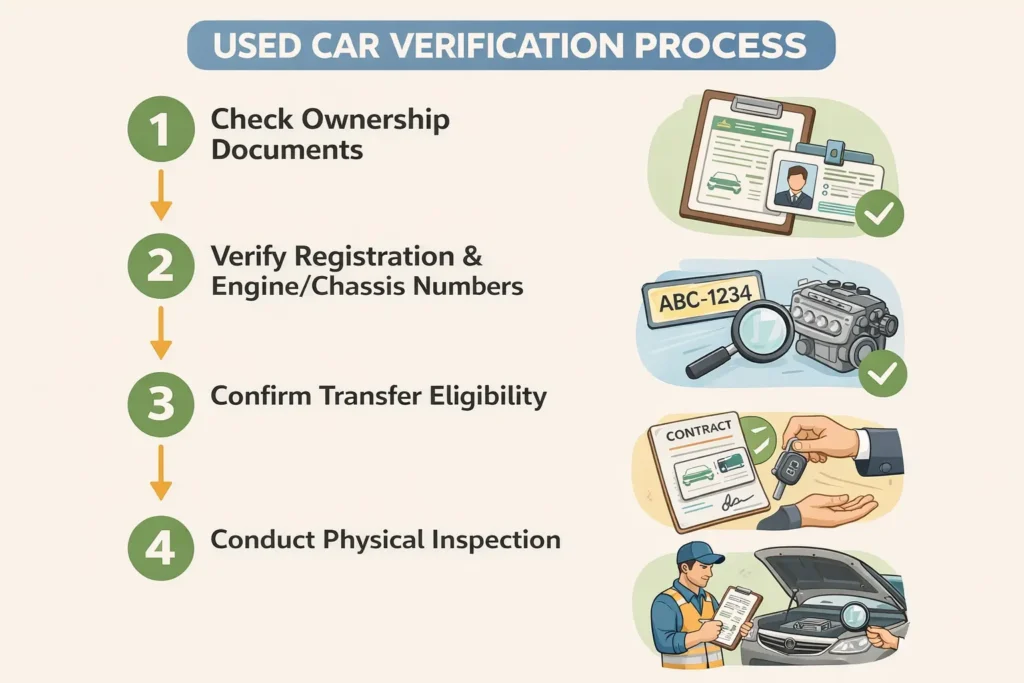
Buying a used car feels simple—until one missed check turns into months of stress. This second-hand car verification in Punjab follows a clear, safe order. It starts with paperwork, moves to data red flags, and ends with transfer clearance. Follow these steps in sequence. Do not skip ahead.
Step 1: Confirm records match what the seller claims.
Step 2: Watch for data mismatches that signal risk.
Step 3: Make sure the car can legally be transferred to your name.
Each step protects you from a different kind of loss—money, time, or legal trouble.
Verify Registration & Ownership Records
This step checks whether the car’s papers, data, and seller story all align. Many buyers rush past this and regret it later.
Start by matching the registration book/card with the seller’s CNIC and claim of ownership. The registered owner name must be exactly the same. Small differences matter.
Then compare the physical details on the car with the documents:
- Engine number
- Chassis number
- Registration number
- Make, model, and color
If even one detail does not match, pause the deal. During a basic used car check, sellers often say, “It’s just a typing mistake.” Sometimes that is true. Often, it is not.
Also confirm:
- The seller is the registered owner (not a “friend” or “relative”)
- No missing or replaced pages in the registration book
If you feel unsure here, stop and verify before paying anything.
Check for MTMIS Record Mismatch Issues
Data mismatches usually do not happen by accident. They appear after tampering, poor record updates, or fraud.
Common MTMIS record mismatch problem indicators include:
- Engine number differs from physical inspection
- Chassis number partially missing or altered
- Owner name does not match registration documents
- Vehicle color or model shows incorrectly
- Registration number linked to a different vehicle type
These issues often signal:
- Engine or chassis replacement without approval
- Fake or cloned registration
- Incomplete ownership updates
- Vehicle involved in past disputes
If you see a mismatch on Second-Hand Car Verification in Punjab, do not assume it can be “fixed later.” Many buyers lose cars or face police inquiries after ignoring this step.
If something looks off, verify again before moving forward.
Confirm Transfer Eligibility Status
Even a clean-looking car can fail at the transfer stage. This step ensures the car can legally move into your name.
Check for silent blockers such as:
- Unpaid token tax
- Excise or court stay orders
- Bank lease or financing hold
- Police or excise blacklisting
- Pending ownership disputes
These issues do not always appear during casual checks. But they stop the transfer instantly at the excise office.
Ask clearly:
- Is the car free from all dues?
- Is there any legal stay on transfer?
- Has the vehicle ever been reported or flagged?
If transfer eligibility is not 100% clear, delay the purchase. Paying before confirmation puts all risk on you.
Before final payment, confirm eligibility and proceed confidently.
Physical Inspection Checks Buyers Often Ignore
Online records can look perfect. But many problems only show up when you see the car in person. A physical inspection helps confirm whether the documents truly match the vehicle in front of you. Skipping these checks is how buyers end up with stolen, rebuilt, or heavily damaged cars.
Before trusting any papers, walk around the car slowly and look closely. Use this simple checklist to catch red flags that databases cannot show:
- Compare the overall wear with the claimed mileage
- Check for uneven paint shades on different panels
- Look at door gaps, bonnet alignment, and trunk fit
- Inspect under the hood for fresh welding or repainting
- Smell the interior for damp or moldy odors
- Test basic functions: lights, indicators, windows, horn
- Look underneath for rust, bends, or patched metal
These checks take less than 15 minutes but can save you from costly mistakes. They are especially important when buying used cars privately or from small dealers.
Engine and Chassis Number Matching
The engine number and chassis number must match the registration records exactly. These numbers are usually found on the engine block, firewall, or under the front seats, depending on the model.
When checking them, look for:
- Clean, factory-stamped lettering
- Even spacing and depth of characters
- No scratch marks, grinding, or fresh paint around the area
Tampering often shows up as uneven fonts, over-polished metal, or numbers that look re-stamped. Sellers may try to distract you or rush this step—don’t allow it. If numbers look altered, walk away immediately.
Signs of Accidental or Flood-Damaged Vehicles
Some damage is easy to hide but hard to fix completely. Flooded or badly crashed cars often show subtle signs.
Watch out for:
- Rust under seats, pedals, or dashboard bolts
- Mud or sand inside spare tire compartments
- Foggy headlights or moisture inside lights
- Electrical issues like flickering dashboard lights
- Seat rails or bolts that look recently removed
A fresh interior smell can be a cover for flood damage. Trust your senses. If something feels off, it usually is.
Common Second-Hand Car Frauds in Punjab
Buying a used car in Punjab can feel tricky if you don’t know what to watch for. Scammers often exploit buyers’ lack of awareness, leading to financial loss or legal trouble. Understanding common frauds can help you spot red flags early and make a safer purchase.
Here are the most frequent scams reported in Punjab’s second-hand car market:
| Fraud Type | Risk | Buyer Impact |
|---|---|---|
| Fake Registration Papers | High | You may unknowingly buy a stolen or illegally registered vehicle, risking fines or confiscation. |
| Odometer Tampering | Medium | The car’s mileage is falsified, making it appear less used. This can hide engine wear and lead to unexpected repair costs. |
| Outstanding Loans/Finance | High | Some sellers hide unpaid loans on the car. If discovered later, the lender can claim the vehicle, leaving the buyer in legal trouble. |
| Identity Misrepresentation | Medium | Sellers may use false identities or stolen documents, complicating ownership transfer. |
| Hidden Accidents or Flood Damage | Medium | Cars may have been in serious accidents or floods, but damage is concealed. Repairs may be expensive, and structural integrity compromised. |
To avoid these pitfalls, always verify documents with the local motor vehicle authority, inspect the car thoroughly, and consider professional vehicle history checks. Recognizing these frauds early can save you thousands of rupees and prevent legal headaches.
When to Walk Away from a Used Car Deal
Buying a used car can feel exciting, but knowing when to step back is crucial. Walking away isn’t about fear—it’s about protecting yourself from legal, financial, and safety risks. Some deal-breakers signal that a purchase isn’t worth it, no matter how appealing the price seems.
Consider walking away if you notice any of these red flags:
- Incomplete or suspicious paperwork – Missing registration, title issues, or unclear ownership history can lead to legal trouble.
- Accident history hidden – Signs of major repairs, mismatched paint, or strong chemical odors may indicate past damage.
- Unexplained mechanical issues – Persistent engine, transmission, or brake problems often mean costly repairs ahead.
- Pressure tactics from the seller – If the seller rushes you or refuses independent inspection, it’s a major warning.
- Price too good to be true – Extremely low prices compared to market value often hide serious problems.
Recognizing these signs protects you from regret and financial loss. Always trust your instincts and be ready to walk away if anything feels off.
Final Buyer Checklist Before Making Payment
Before handing over your hard-earned money, a final Second-Hand Car Verification in Punjab is crucial to avoid costly mistakes. Use this buyer checklist to ensure everything is in order:
- Verify Ownership Documents: Confirm the car’s registration matches the seller’s ID. Ensure there are no pending loans or legal disputes.
- Confirm Vehicle History: Check past accidents, service records, and mileage authenticity. A clean history reduces future risks.
- Inspect Physical Condition: Review the exterior, interior, tires, and engine. Ensure no hidden damages or modifications.
- Test Drive: Evaluate performance, brakes, steering, and suspension. Listen for unusual noises during the drive.
- Check Vehicle Identification Number (VIN): Match VIN on the car with documents and past records to avoid fraud.
- Confirm Insurance Status: Ensure the car has valid insurance and understand transfer requirements.
- Negotiate & Document Payment Terms: Agree on price, method, and receipt format before payment.
Completing this buyer checklist gives you confidence that your purchase is safe and informed.
FAQs About Second-Hand Car Verification in Punjab
Buying a used car can be confusing, and questions often come up that aren’t covered in general guides. These FAQs address common edge cases buyers face during Second-Hand Car Verification in Punjab, helping you avoid legal or financial pitfalls. Understanding these scenarios ensures you make safer, smarter decisions when purchasing a second-hand car.